

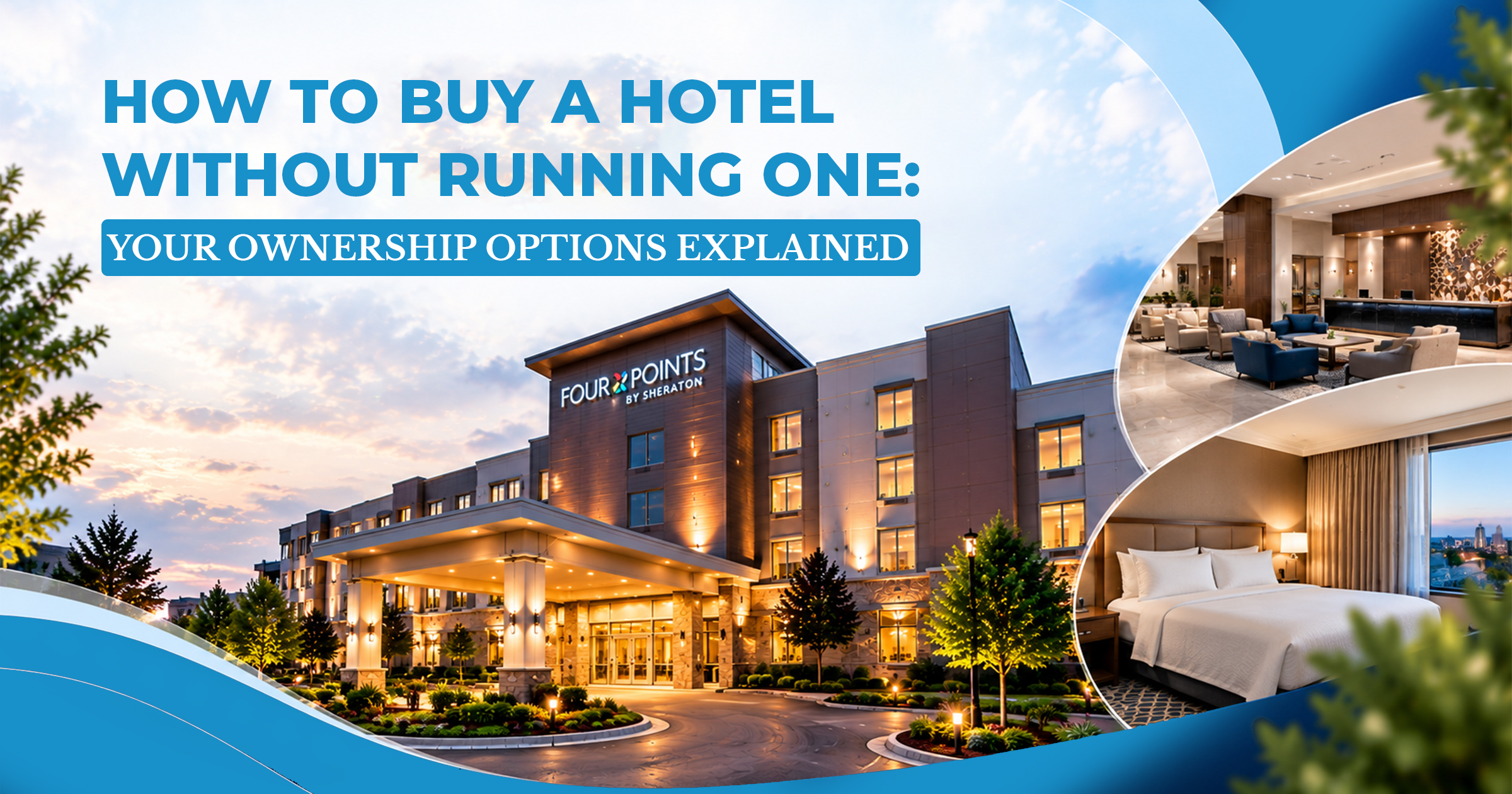
Owning a hotel has real appeal. Hotels can earn revenue every night, benefit from well-known brands, and grow in value over time. But most people who look into how to buy a hotel quickly run into two obstacles: the price tag and the work. A hotel can cost millions of dollars, and running one means staffing, bookings, housekeeping, maintenance, and guest service around the clock.
The good news is that owning a hotel and operating one are two different things. Many hotel owners never manage a single shift. They own the property while professional management companies and brands handle daily operations.
This guide explains how buying a hotel works, the ownership options that don’t require you to run the property, and the key numbers to review before you commit. It also shows how fractional hotel ownership through Vairt lets you own part of a professionally managed, Marriott-branded hotel starting at $25,000.
Want to own part of a hotel without the cost of buying one or the work of running it? Schedule a free 15-minute call and we’ll walk you through the Four Points by Sheraton and Vairt’s other hotel properties.
Yes. You can buy a hotel without running it by hiring a professional hotel management company, partnering with a group of owners, or owning a fractional share of a hotel through a platform where the operating team is already in place. In each case, you own the hotel or a share of it, while specialists handle the day-to-day work.
This separation is common across the hotel industry. Many hotels have three distinct parties: the owner, who holds the real estate; the brand, which provides the name, reservation system, and standards; and the management company, which runs operations. Understanding this structure is the first step in learning how to buy a hotel without becoming a hotel operator.
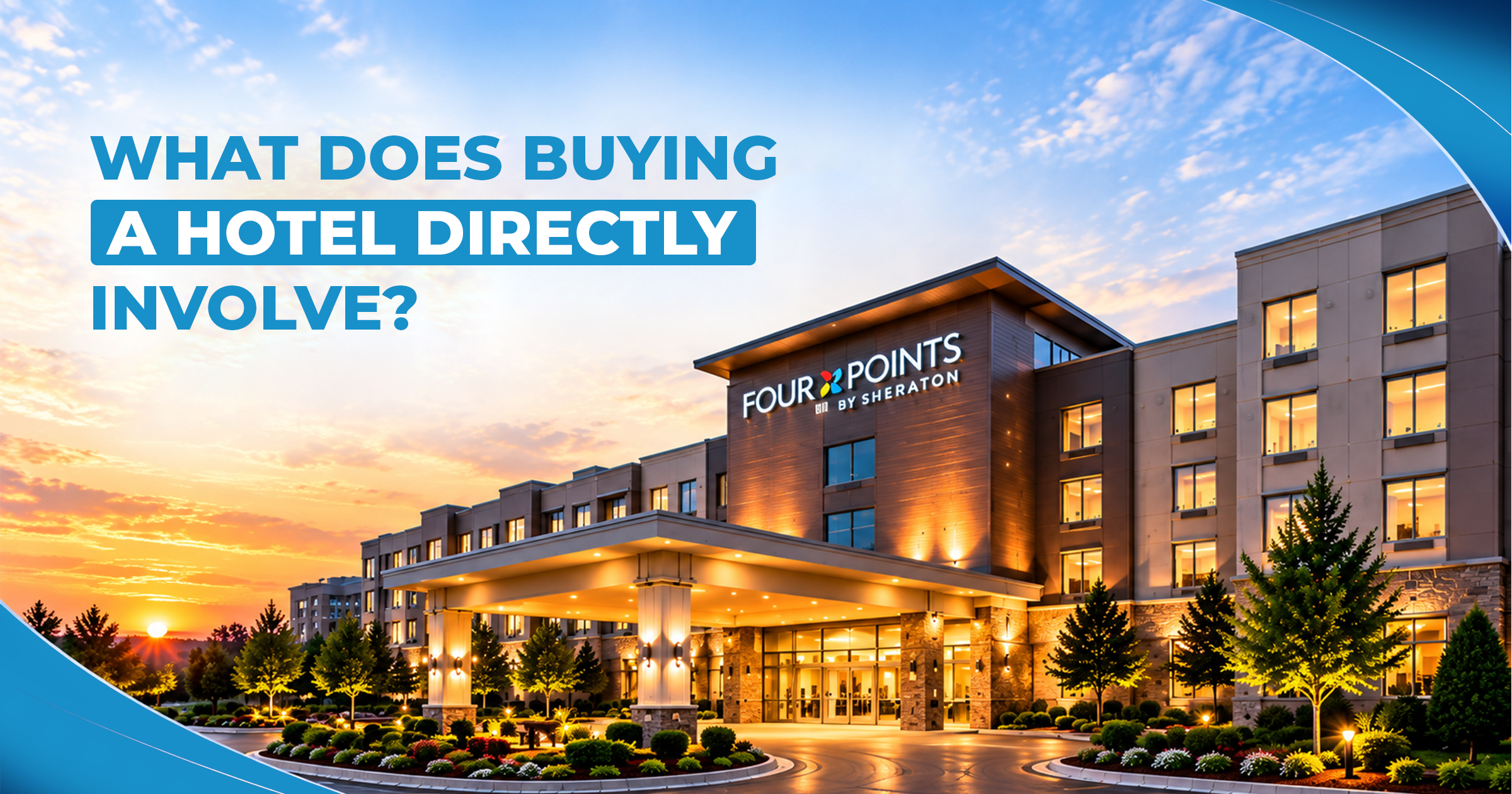
Buying a hotel directly is a larger and more specialized process than buying other types of real estate. Before looking at hands-off options, it helps to understand what a direct purchase requires.
The process usually begins with choosing a hotel segment. Limited-service hotels offer rooms with few extra amenities, select-service hotels add features like a small restaurant or fitness center, and full-service hotels include dining, meeting space, and event facilities. Each segment comes with different costs, staffing needs, and income profiles.
Next comes market research. Buyers study local demand drivers such as business travel, events, hospitals, universities, and tourism, along with competing hotels in the area. A hotel in a downtown location with steady corporate and event demand behaves very differently from one that depends on seasonal leisure travel.
Then buyers review the hotel’s performance numbers, arrange financing, negotiate with the brand, and complete detailed due diligence on the building, operations, and contracts. Finally, they decide who will run the hotel day to day. For most owners, that’s where a professional management company comes in.
Hotels are measured differently from apartments or office buildings, so a few key terms are worth knowing.
Occupancy is the percentage of available rooms that are booked over a period of time. ADR, or average daily rate, is the average price paid per booked room. RevPAR, or revenue per available room, combines the two by multiplying occupancy by ADR, and it’s one of the most widely used measures of how well a hotel is performing.
Owners also look at net operating income (NOI), which is the hotel’s revenue minus its operating expenses, before loan payments. Because hotels have significant costs for staffing, utilities, supplies, and brand fees, NOI gives a clearer picture of what the property actually earns than revenue alone.
Reviewing several years of these numbers, along with the local market’s performance, helps buyers understand how a hotel has performed and where its income potential lies. Our guide to the things to consider when buying commercial property covers the broader due diligence process in more detail.
Many hotels operate under a franchise agreement with a major brand. The brand provides its name, reservation system, loyalty program, marketing, and operating standards in exchange for fees. A recognized brand can help drive bookings, especially from business travelers and loyalty program members who look for familiar names.
Brands also set standards for the property’s condition. When a hotel changes ownership, the brand may require a property improvement plan, often called a PIP, which outlines renovations needed to meet current standards. That’s why a hotel’s recent renovation history is an important part of any purchase decision. A hotel that has already completed a major renovation is often positioned to focus on operations rather than upcoming capital projects.
Want to own part of a hotel without the cost of buying one or the work of running it? Schedule a free 15-minute call and we’ll walk you through the Four Points by Sheraton and Vairt’s other hotel properties.
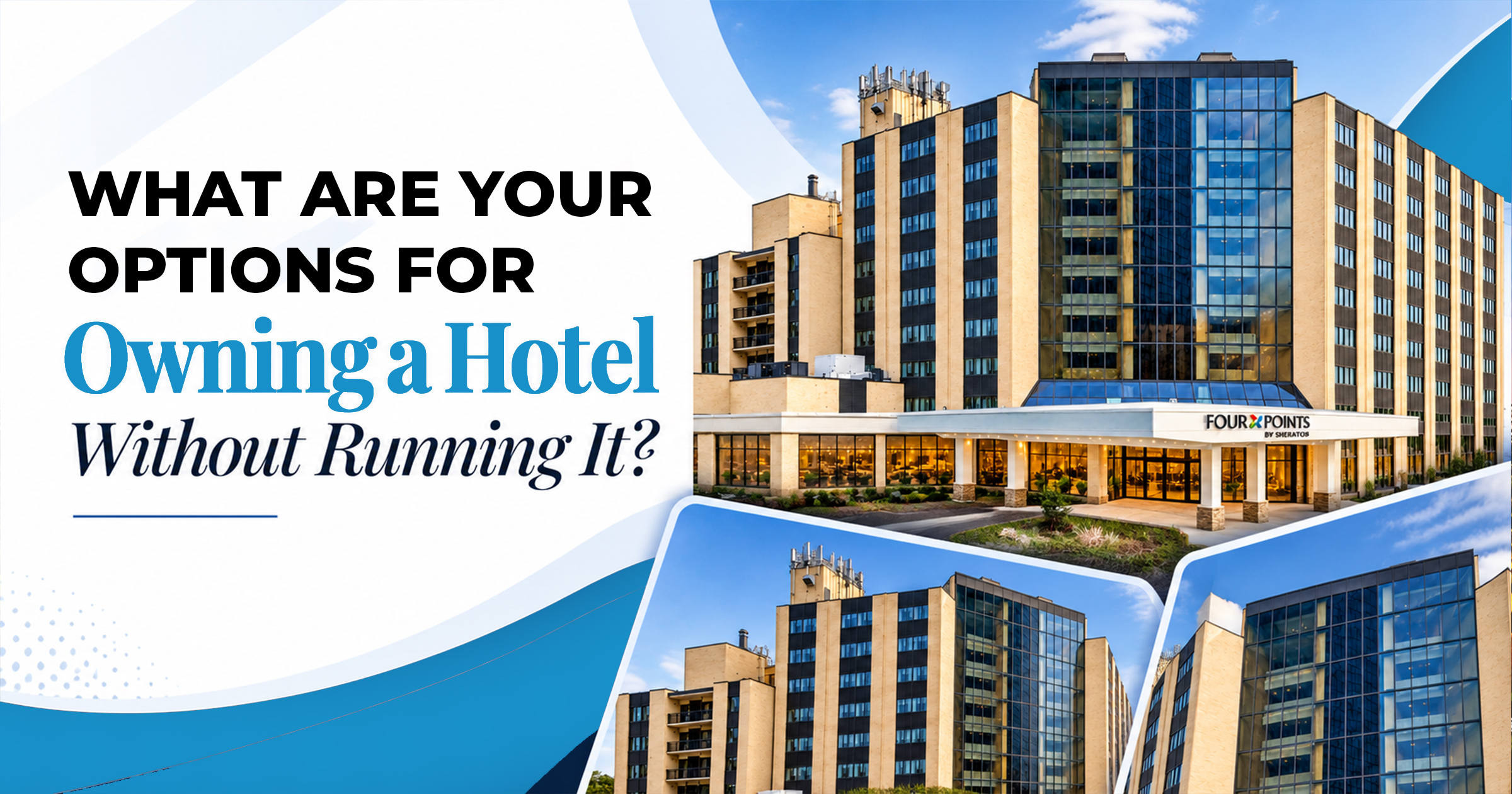
There are several ways to own a hotel without taking on daily operations. Each one balances capital, control, and involvement differently.
This is the traditional route for individual buyers. You purchase the entire hotel, often with a combination of cash and financing, and sign a management agreement with a professional hotel management company. The company handles staffing, sales, operations, and reporting in exchange for a management fee.
This option gives you full ownership and full control over major decisions. It also requires the most capital, since you’re buying the whole property, and you remain responsible for financing, oversight of the management company, and approving budgets and capital projects.
In a syndication, a sponsor buys a hotel using capital pooled from a group of participants. The sponsor oversees the property and the business plan, and participants share in income and any appreciation. This lowers the capital each person needs, though syndications often have high minimums and are frequently limited to accredited participants who meet certain income or net worth thresholds.
Some publicly traded REITs, which are companies that own portfolios of income-producing properties, specialize in hotels. Buying their shares gives you exposure to many hotels at once, and the shares can be sold on a stock exchange. The tradeoff is that you can’t choose specific hotels, and share prices move with the stock market as well as with hotel performance.
Fractional hotel ownership lets you own a share of one specific hotel, held in its own legal entity, while a professional team runs it. You choose the exact hotel, review its details, and receive your share of its rental income, without buying the entire property or managing operations.
This option combines property-level choice with a hands-off role and a much lower starting point than buying a hotel outright. It’s the model Vairt offers.
Here’s how the four options compare:
|
Ownership Option |
Capital Needed |
Your Role |
Choose the Specific Hotel? |
|
Buy and hire a management company |
Very high |
Owner and overseer |
Yes |
|
Partnership or syndication |
Often high |
Participant |
Yes |
|
Lodging REIT shares |
Low |
Shareholder |
No |
|
Fractional hotel ownership |
$25,000 minimum on Vairt |
Owner who reviews and monitors |
Yes |
Fractional hotel ownership on Vairt follows a simple path: review, choose, own, and monitor. Vairt handles the work that would normally fall on a hotel buyer, from finding and screening properties to structuring ownership and putting professional operators in place.
Each property is evaluated with a 100-point proprietary screening tool and supported by a third-party valuator before it’s listed. You can learn more about that process on Vairt’s property review process page. Once you choose a hotel, your funds are held in escrow during the 30-day funding window, and if a property isn’t fully funded, committed amounts are returned to your digital wallet at no cost.
After funding, the hotel is held in its own LLC, a legal entity created to own one particular property. The LLC is divided into one million shares, allocated in proportion to each participant’s contribution. A professional team manages the hotel’s operations, rental income is distributed monthly to each owner’s digital wallet, and owners follow performance through Vairt’s digital dashboard and mobile app.
Vairt’s hotels are designed around a five-year holding period. For owners who want to exit sooner, Vairt offers a 90-day exit option, and owners can also list their shares on a secondary market or call a vote among owners to sell the property. You can see every step on Vairt’s How It Works page.
The Four Points by Sheraton in downtown Peoria, Illinois shows what buying part of a hotel looks like in practice.
The property is a 323-room, full-service hotel operating under the Four Points by Sheraton brand, part of the Marriott portfolio. It completed a $40 million renovation in 2020, so its major capital work is already behind it. Its downtown location benefits from corporate and event-driven demand, and Peoria County ranks among the top U.S. counties for rental yields in 2026.
Vairt projects annual rental income of 7% to 9% during years one through five, paid to owners as monthly distributions, along with long-term appreciation potential over the five-year holding period. Owners don’t hire staff, manage bookings, or oversee housekeeping. The professional team runs the hotel, and the Marriott brand supports bookings through its reservation network and loyalty program. Projected figures are based on Vairt’s current estimates, and actual income follows the hotel’s performance.
The minimum to participate is $25,000, a fraction of what it would cost to buy a full-service hotel outright.
Vairt also lists other hospitality properties at different stages. The Econo Lodge Inn & Suites in Triadelphia, West Virginia, is a 113-room hotel with a value-add plan, meaning planned improvements aimed at growing its income and value over time. The 5 Million Star Hotel in Pennsylvania is a 60-unit hospitality development built around dome-style accommodations in a natural setting.
Together, these listings let owners choose between a renovated, branded full-service hotel, a value-add hotel, and a distinctive hospitality development, each with a $25,000 minimum. For help comparing them, see our guide to the best fractional ownership properties and what to look for.
Full property details, including projections, cost breakdowns, holding terms, and eligibility, are available to registered users. Creating a Vairt account takes just a few minutes and lets you compare all of Vairt’s current hotel ownership opportunities side by side.
Want to own part of a hotel without the cost of buying one or the work of running it? Schedule a free 15-minute call and we’ll walk you through the Four Points by Sheraton and Vairt’s other hotel properties.
Whether you buy a hotel outright or own a share of one, reviewing a few key factors helps you make an informed decision. Location and demand drivers come first, since a hotel’s bookings depend on business travel, events, and tourism in its area. The brand and its reservation network matter too, along with the hotel’s condition and recent renovation history.
Hotel income follows travel demand, room rates, and operating costs, so it’s also worth understanding how the property’s income is projected and over what holding period. For value-add and development hotels, the scope and timeline of planned work shape when income potential develops. Our guide to commercial real estate passive income explains how these factors work across different commercial property types, and our overview of the 7 types of income generating property shows how hotels compare with offices and residential communities.
Fractional hotel ownership is a strong fit for people who are drawn to hotel ownership but don’t want to buy an entire property or become a hotel operator. It works especially well for busy professionals, people who want monthly income potential from a branded hotel, and anyone who prefers reviewing a property over managing staff and guests.
It also suits people who are comfortable with a five-year holding period and who like having a 90-day exit option available. Buyers who want full control over every operational decision, or who plan to run a hotel themselves as a business, may prefer buying a hotel outright and hiring their own management company.
Learning how to buy a hotel usually means facing a long list of challenges: millions in capital, financing, brand requirements, renovation plans, and the daily work of running a property that never closes. For most people, that puts hotel ownership out of reach.
Fractional hotel ownership changes the equation. With Vairt, you can own part of a renovated, Marriott-branded hotel like the Four Points by Sheraton in downtown Peoria, receive projected rental income as monthly distributions, and rely on a professional team to handle operations. Review the hotel’s location, brand, income projections, and holding period, and then choose the property that fits your goals.
When you’re ready to see the full details, create a Vairt account and explore Vairt’s current hotel listings.
To buy a hotel directly, you typically choose a hotel segment, research local demand, review the hotel’s occupancy, ADR, RevPAR, and net operating income, arrange financing, review brand and franchise terms, complete due diligence, and hire a management company. If you’d rather not buy an entire hotel, fractional ownership lets you own a share of a specific hotel while a professional team runs it.
Buying a hotel outright usually costs millions of dollars, depending on its size, segment, location, and condition, plus closing costs, reserves, and any required renovations. Fractional ownership lowers the starting point considerably. On Vairt, you can own a share of hotels like the 323-room Four Points by Sheraton in downtown Peoria, Illinois, with a $25,000 minimum.
Yes. Many hotel owners never handle daily operations. They hire professional hotel management companies or own shares through structures where an operating team is already in place. With fractional hotel ownership on Vairt, a professional team runs the hotel, rental income is distributed monthly to owners, and owners follow performance online.
Hotels can produce strong income because they earn revenue every night and can adjust room rates to demand. Results depend on occupancy, room rates, operating costs, brand strength, and management quality. For example, Vairt projects annual rental income of 7% to 9% in years one through five for its Four Points by Sheraton hotel, paid monthly, based on its current estimates.
RevPAR, or revenue per available room, is a key hotel performance measure. It’s calculated by multiplying a hotel’s occupancy rate by its average daily rate, or by dividing total room revenue by the number of available rooms. RevPAR helps owners compare how well a hotel is performing over time and against competing hotels in the same market.
With fractional hotel ownership on Vairt, yes. Hotels are designed around a five-year holding period, and Vairt offers a 90-day exit option for owners who want to exit sooner. Owners can also list their shares on a secondary market or call a vote among owners to sell the property, with pricing based on market conditions at the time.
No. Hotel income depends on occupancy, room rates, operating expenses, and travel demand in the local market. Projected figures, like the annual rental income ranges Vairt shares for each hotel, are a helpful way to compare options. Reviewing each hotel’s location, brand, condition, and holding period helps you make an informed decision.

I'm Muhammad Waqas, a real estate content writer at Vairt with 8 years of experience writing about property ownership and real estate. I cover topics such as fractional real estate, hotel and commercial property ownership, and how to evaluate income-producing properties. My writing focuses on helping U.S. readers understand how professionally managed real estate works, including its benefits, risks, and structure, before they explore an opportunity.

Certain statements contained in this document constitute forward-looking statements. Such forward-looking statements, including our intended actions and performance objectives, projections, targets, estimates, or forecasts involve known and unknown risks, uncertainties and other important factors, including our ability to successfully develop and operate the Vairt Marketplace, our business model and the services we intend to offer. These factors are based on expectations and assumptions that may change and are subject to regulatory uncertainty, changes in our legal environment and the blockchain and real estate industries generally, which could cause our actual results, performance or achievements to differ materially from any future results, performance or achievements expressed or implied by such forward-looking statements. All amounts, numbers, ranges, and values presented in this document are subject to material change and should be taken as preliminary and indicative only. Any such amounts, numbers, ranges, and values are based upon preliminary estimates, remain subject to ongoing analysis and may change materially. All forward-looking statements in this document speak only as of the date hereof. We expressly disclaim any obligation to update any forward-looking statement to reflect any change in our expectation or any change in events, conditions, assumptions or circumstances.
.jpg)

_(1)_.jpg)

Comments