

Commercial properties like hotels, office buildings, parking facilities, and large residential communities can produce steady income from guests, tenants, and residents. The challenge is getting in. Buying a commercial property usually takes millions of dollars, financing, and a team to handle leasing, maintenance, and operations.
That puts commercial real estate passive income out of reach for most people, at least through direct ownership.
There is another route. Through professionally managed fractional ownership, you can hold a share of a specific commercial property while an experienced operating team handles the day-to-day work. This guide explains where commercial property income comes from, the main ways to access it, and how platforms like Vairt make commercial real estate ownership more accessible.
Buying a commercial property on your own means large capital, financing, and years of managing tenants and operations. Schedule a free 15-minute call to see how you can own part of a professionally managed hotel, office, or residential property instead.
Yes. You can earn potential passive income from commercial real estate by owning all or part of an income-producing commercial property that is run by professional managers. Your role shifts from operating the property to reviewing it, choosing it, and monitoring its performance.
The word "potential" matters. Commercial property income depends on factors like occupancy, lease terms, operating expenses, and market conditions, so it is not guaranteed.
The word "passive" matters too. Passive real estate means you aren't responsible for the day-to-day work of leasing space, collecting rent, handling repairs, or managing staff. The property's performance still depends on real-world factors, which is why reviewing each property carefully is part of the process.
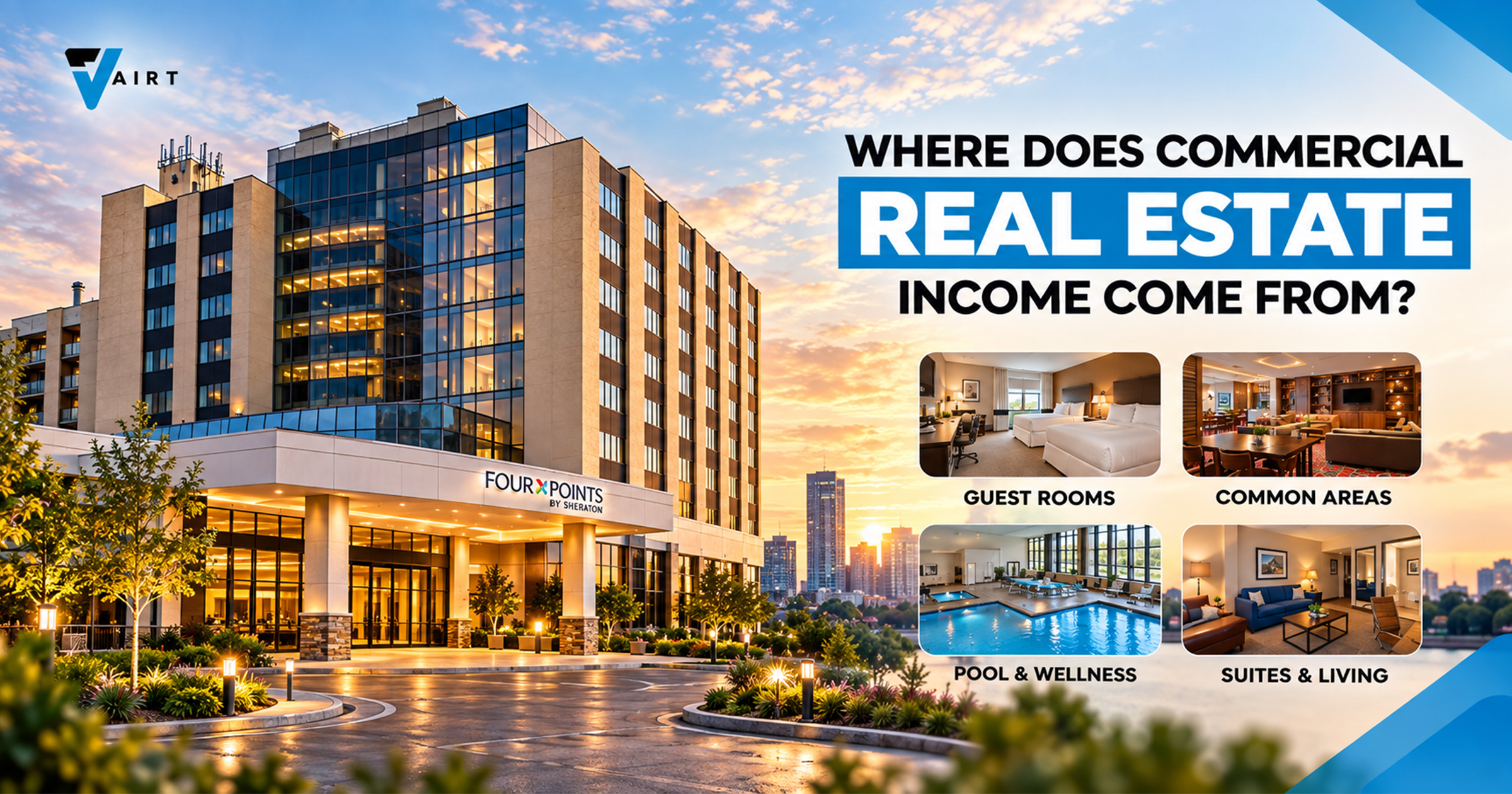
Commercial real estate income comes from businesses, residents, or guests paying to use a property. The source of that income depends on the property type.
Hotels earn revenue from nightly room stays, plus services like dining or event space.
Short-term rentals earn revenue from guests booking stays by the night, often in experience-focused properties.
Office buildings earn rent from business tenants, usually under multi-year leases.
Parking facilities earn revenue from daily, monthly, and event parking.
Retail properties earn rent from stores, restaurants, and service businesses.
Industrial properties, such as warehouses and distribution centers, earn rent from logistics and manufacturing tenants.
Multifamily and residential communities, typically properties with five or more units, are often treated as commercial real estate and earn residential rent.
Owners don't receive all of that revenue. Operating expenses, management fees, property taxes, insurance, repairs, and any loan payments come out first. What remains is the property's distributable income.
Lease structure also shapes how income behaves. In a triple-net (NNN) lease, the tenant pays most property costs, such as taxes, insurance, and maintenance, in addition to rent. That can make income more predictable for owners. Hotels and short-term rentals work differently. Without long-term leases, their revenue moves with travel demand and room rates, which gives them the flexibility to adjust pricing as demand changes.
Commercial real estate can produce income, but owning a property yourself is a lot of work.
Direct ownership usually means:
Large capital requirements, often a substantial down payment plus financing on a multimillion-dollar property
Finding and analyzing deals in a market you may not know well
Leasing space, negotiating terms, and replacing tenants when leases end
Paying for tenant improvements, such as building out space for a new business
Managing vacancies between tenants
Overseeing repairs, contractors, and compliance
Running operations, which for a hotel means staffing, bookings, housekeeping, and brand standards
Even with a property manager, a direct owner still makes major decisions, approves budgets, and carries the full financial responsibility of one property.
That's the gap fractional ownership aims to fill. Instead of buy, finance, lease, manage, repair, and sell, the process becomes review, choose, own, and monitor.
Direct ownership requires capital and ongoing management. Schedule a free 15-minute call to learn how you can own a share of a professionally managed property.
There are several paths to passive income from commercial real estate. Each comes with a different balance of capital, control, and involvement.
You own the property and hire a management company to run it. This gives you full control and the full share of income and appreciation. It also requires the most capital, and you remain responsible for major decisions and financing.
A single-tenant NNN property, such as a building leased to a national retailer, can require relatively little hands-on work. These properties typically require significant capital, and because income comes from one tenant, the strength of that tenant and the remaining lease term are central to the decision.
REITs are companies that own portfolios of income-producing properties, and many trade on stock exchanges. They are easy to buy and sell and spread exposure across many properties. The tradeoff is that you can't choose specific properties, and share prices move with the stock market as well as with property performance.
In a syndication, a sponsor buys a commercial property with capital pooled from many participants. These deals often have high minimums and are frequently limited to accredited participants who meet certain income or net worth thresholds.
Platforms that offer fractional ownership let you choose a specific commercial property, participate with a defined minimum amount, and hold a proportional share of the entity that owns it. Professional managers handle operations, and you monitor performance online. If you're new to this model, our guide on how partial property ownership works with real estate platforms covers the structure in more detail.
Here's how these paths compare:
|
Approach |
Capital Needed |
Your Involvement |
Choose the Property? |
|
Direct ownership with manager |
Very high |
Moderate |
Yes |
|
Triple-net leased property |
High |
Low to moderate |
Yes |
|
Publicly traded REITs |
Low |
Very low |
No |
|
Private syndication |
Often high |
Low |
Yes |
|
Fractional platform ownership |
Platform minimum |
Low |
Yes |
Fractional ownership sits in a useful middle ground. You keep property-level choice without needing the capital or time that direct ownership requires.
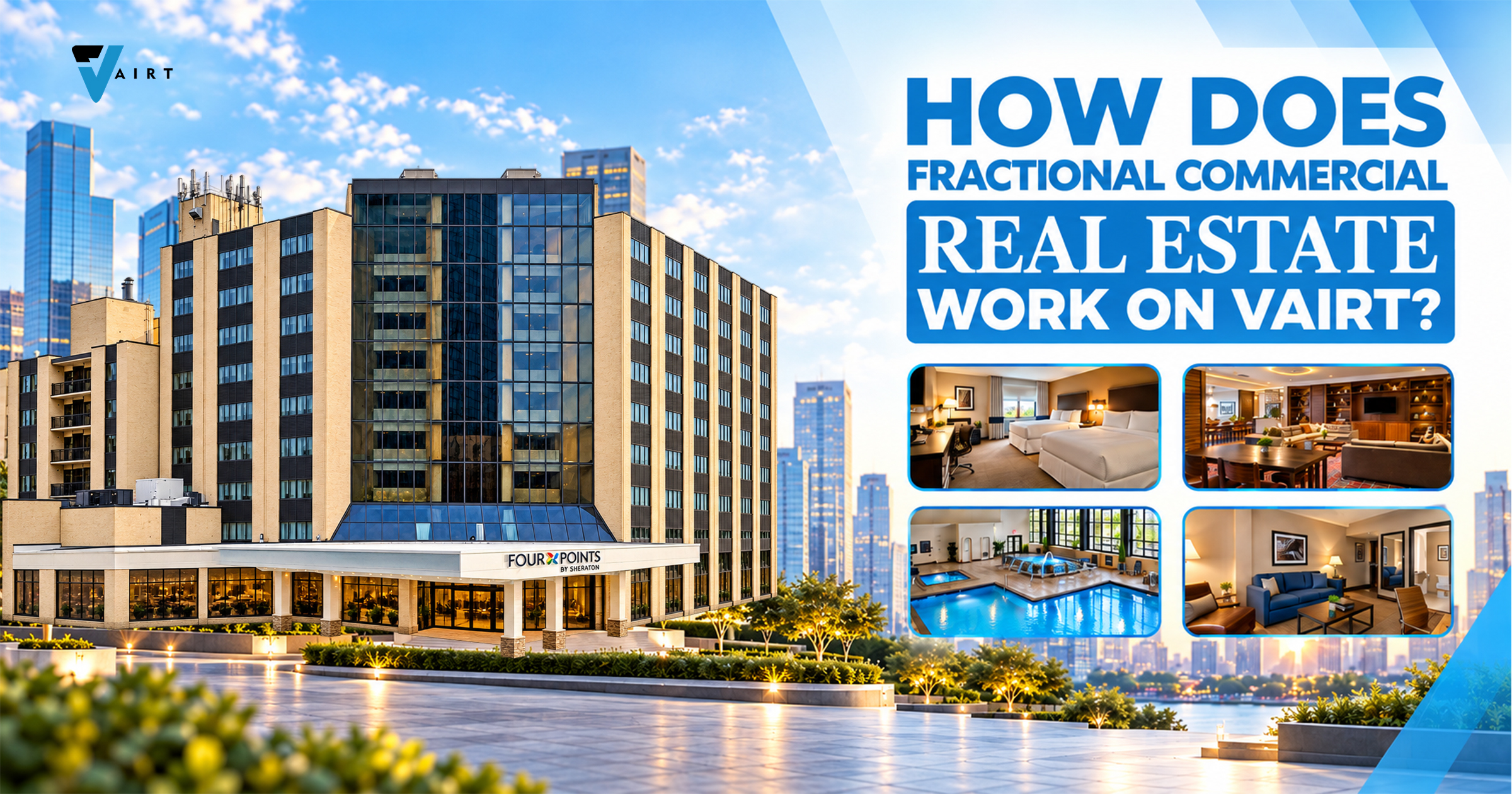
On Vairt, participants review individual properties, choose an amount above the listed minimum, and own shares of a property-specific LLC that holds the real estate. A professional team runs the property, and income is distributed to owners based on their shares.
Here's how the process works in practice:
Screening: Vairt evaluates each property with a 100-point proprietary screening tool and supports its assessment with a third-party valuator.
Funding: Properties are listed for 30 days, and participant funds are held in escrow during that time. If a property isn't fully funded within the window, committed amounts are returned to the participant's digital wallet at no cost.
Ownership: Once funded, Vairt forms an LLC for the property in the relevant state. A property-specific LLC is a legal entity created to own one particular property. Each LLC is divided into one million shares, allocated in proportion to each participant's contribution.
Management: The management team handles maintenance and keeping the property occupied, so owners aren't managing tenants, guests, or repairs.
Income: Rental income is transferred to each owner's digital wallet, where it can be withdrawn or reinvested. Owners can track updates through Vairt's website and mobile app.
Holding and exit: Vairt recommends a five-year holding period. Owners can list shares on a secondary market or call a vote among owners to sell the property. As with any real estate sale, timing and pricing depend on buyer demand and market conditions at that point.
You can see the full step-by-step process on Vairt's How It Works page.
A few current listings show how income-producing commercial properties can work in a fractional structure. They are very different properties, which makes them useful for comparison. Each lists a $25,000 minimum.
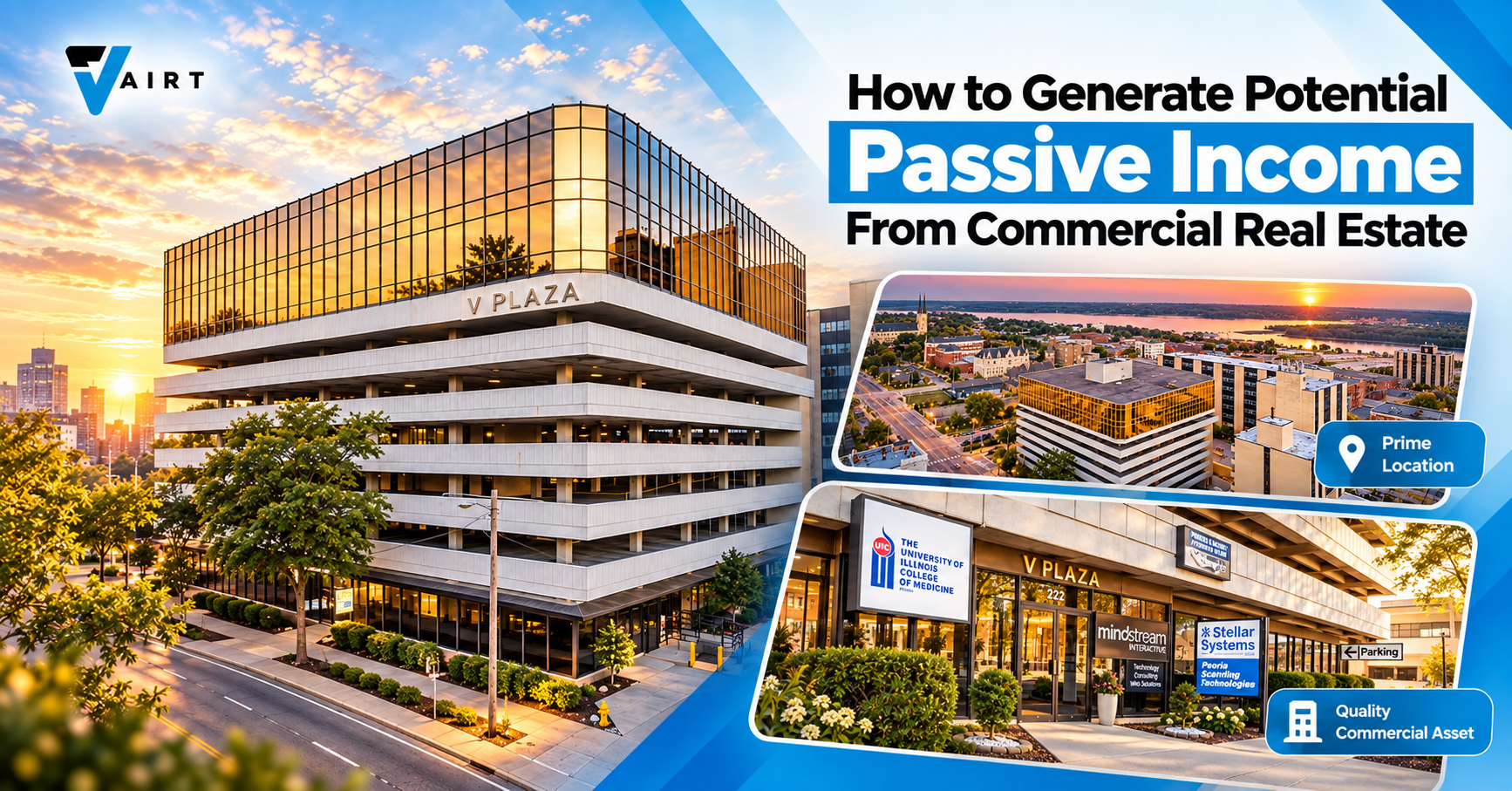
Vairt commercial office and parking property in downtown Peoria, Illinois combines stabilized office space with a large structured parking facility. The property totals 272,876 square feet.
This property has two separate income streams:
Office leases, which typically follow multi-year terms
Parking revenue, which can come from monthly permits, daily users, and event demand in a downtown area
Having more than one income source within a single property is a form of built-in diversification. Each stream responds to different demand drivers, which can help balance overall property income.
V Resort Living is a resort-style residential community in Sheridan, Illinois, with 332 residences across 165 acres. The listing covers approximately 851,123 square feet, making it the largest of the current examples.
Here, income comes from residents rather than business tenants. The key factors to review are occupancy across the community, rent levels, resident retention, and the ongoing upkeep of a property spread across 165 acres.
The listing includes both an acquisition cost and a rehab budget. That reflects a value-add plan: acquire the property, make targeted improvements, and aim to increase its income and value over time. When reviewing a value-add property, look at the scope of planned improvements and the expected timeline, since both shape how and when income potential develops.
In both cases, the operational work stays with the management team. As an owner, you aren't negotiating office leases, running a parking operation, leasing residential units, or maintaining grounds. Your role is to review the property's details and terms, decide whether to participate, and monitor updates.
Ready to own a share of a professionally managed property without handling the day-to-day operations? Schedule a free 15-minute call and discuss your ownership opportunity with Vairt.
Office buildings and residential communities are only part of what's available. Vairt also lists hotels and short-term rental properties, each with its own income model. Current listings in these categories also start at $25,000.
Hotels earn income from nightly room stays rather than long-term leases, so revenue can adjust with travel demand and seasonal patterns. Hotels also require full-time operations: staffing, bookings, housekeeping, and maintenance. In a fractional structure, all of that stays with the professional management team.
Vairt currently lists two hotels:
Four Points by Sheraton, downtown Peoria, Illinois: A 323-room, full-service hotel operating under a Marriott brand. Vairt describes it as fully renovated and positions it for both income potential and long-term appreciation potential.
Econo Lodge Inn & Suites, Triadelphia, West Virginia: A 113-room hotel. The listing includes both an acquisition cost and a rehab budget, reflecting a value-add plan to improve the property and grow its income and value.
The two offer different profiles. One is a large, fully renovated, full-service downtown hotel. The other is a smaller property with planned improvements.
Short-term rentals sit between hotels and traditional rentals. Guests book stays by the night, and properties are often designed around a distinctive experience.
Vairt's 5 Million Star Hotel is a 60-unit hospitality project in Pennsylvania built around dome-style accommodations in a natural setting. Its budget covers acquisition plus construction of the domes and a parking lot, making it a development project. For development properties, the construction timeline, budget, and plan for building guest demand after opening are the key details to review.
Each of these properties works differently, and the details matter. Projected figures, cost breakdowns, holding periods, and eligibility requirements are available to registered users on each property page.
Creating a Vairt account takes a few minutes and lets you review every current listing in depth, from the Peoria office and parking property and V Resort Living to the Four Points by Sheraton, Econo Lodge, and 5 Million Star Hotel. You can then compare all of Vairt's current commercial real estate opportunities side by side and decide which property fits your goals. Some listings are limited to certain participant categories, so check eligibility on each property page.
Every commercial property is shaped by a set of property-specific and market factors. Understanding them is a normal part of due diligence and helps you set realistic expectations:
Occupancy and lease renewals: Income depends on keeping space leased or rooms booked, and on how leases are renewed over time.
Travel demand: Hotels and short-term rentals are influenced by business and leisure travel patterns.
Tenant quality: The financial strength of tenants supports consistent rent collection.
Operating expenses: Taxes, insurance, utilities, staffing, and maintenance costs affect how much income reaches owners.
Interest rates: Rates can influence financing costs and property valuations.
Property type trends: Demand patterns evolve across office, hospitality, and residential properties, so it helps to understand current trends for the type you're considering.
Renovation and construction plans: For value-add and development properties, the scope and timeline of planned work shape when income potential develops.
Local market conditions: Employers, population trends, and new supply all influence demand.
Economic conditions: Broader economic cycles affect travel, leasing activity, and rents.
Professional management: Day-to-day execution by the operating team plays a central role in results.
Liquidity and holding period: Real estate is a long-term asset. Selling a share before the planned holding period depends on buyer demand and market conditions.
These factors apply to all commercial real estate, not any single property or platform. Reviewing them is how informed owners make confident decisions. For a deeper look, see our breakdown of common real estate risks and how to manage them, and learn how Vairt evaluates properties on its property review process page.
Before committing to any commercial property, look for clear answers to these questions:
What drives demand for this property and location?
Where does the income come from, and how is each source structured?
What are the operating expenses and fees, and are projections shown before or after them?
What assumptions sit behind projected income and appreciation?
If there's a renovation or construction plan, what is the scope, budget, and timeline?
Who manages the property, and how often will owners receive updates?
What is the expected holding period, and what exit options exist?
What legal entity holds the property, and what do owners receive?
A well-presented opportunity should make these answers easy to find. For a step-by-step framework, read our guide on how to evaluate an income-producing property opportunity before you commit.
Fractional commercial real estate tends to fit people who:
Want potential income from commercial property without managing tenants, guests, or operations
Prefer not to buy an entire commercial property
Want to choose specific properties rather than a broad portfolio
Are comfortable with a multi-year holding period
Want to spread their capital across different property types, such as hotels, office, and residential
Other options may suit people who:
Need short-term access to their money
Want full control over leasing and operating decisions
Prefer the daily trading of publicly listed shares
Want fixed, predictable income rather than income that follows property performance
If the cost of buying a commercial property, or the work of running one, has kept you out of commercial real estate, fractional ownership offers another route. You can hold a share of a specific hotel, office, parking, or residential community property while professional managers handle leasing, guests, maintenance, and operations.
Like all real estate, commercial real estate passive income follows how the property performs. Review the location, income sources, expenses, renovation plans, ownership structure, holding period, and exit terms, and then decide whether a property fits your goals.
The simplest next step is to create a Vairt account. It takes a few minutes and unlocks the full details for every current listing, so you can review real numbers before making any decision.
Ready to access commercial real estate without managing the property yourself? Schedule a free 15-minute call to discuss your ownership opportunity with Vairt.
Commercial real estate passive income is income earned from owning all or part of a commercial property, such as a hotel, office building, parking facility, or large residential community, without handling day-to-day operations yourself. A professional management team handles leasing, guests, maintenance, and tenants. Owners may receive a share of the income left after operating costs and fees, based on property performance.
It depends on the approach. Buying a commercial property directly often requires a large down payment plus financing. Publicly traded REIT shares can be bought for much less. Fractional ownership platforms fall in between. Current hotel, office, residential, and short-term rental listings on Vairt show a $25,000 minimum. Always confirm minimums and eligibility on the specific listing.
No. Like all real estate income, it depends on occupancy, lease terms, travel demand, operating expenses, interest rates, and local market conditions. Projected figures are estimates based on stated assumptions and are a helpful tool for comparing properties. Property values also change over time, which is why reviewing each property's details and holding period is part of making an informed decision.
Hotels can offer strong income potential, and they work differently from leased properties. Revenue comes from nightly stays, so it adjusts with travel demand and room rates, and hotels have operating costs for staffing and guest services. In a professionally managed structure, owners don't handle any of those operations. Income follows the hotel's performance, so location, brand, and management are key factors to review.
A triple-net (NNN) lease is a commercial lease in which the tenant pays rent plus most of the property's costs, typically property taxes, insurance, and maintenance. This can make income more predictable for owners, since fewer expenses fall on them. Because NNN properties are often leased to a single tenant, the tenant's financial strength and remaining lease term are important factors to review.
It depends on the opportunity. Publicly traded REIT shares are generally open to anyone. Many private commercial real estate offerings are limited to people who meet certain income or net worth thresholds. On Vairt, some listings are available to specific participant categories, so check eligibility on each property page before committing.
Commercial real estate is usually held for several years to allow time for income and potential appreciation. Vairt recommends a five-year holding period. Owners may also be able to exit earlier by selling shares on a secondary market or through an owner vote to sell the property. The timing and price of an early exit depend on buyer demand and market conditions.

I'm Muhammad Waqas, a real estate content writer at Vairt with 8 years of experience writing about property ownership and real estate. I cover topics such as fractional real estate, hotel and commercial property ownership, and how to evaluate income-producing properties. My writing focuses on helping U.S. readers understand how professionally managed real estate works, including its benefits, risks, and structure, before they explore an opportunity.

Certain statements contained in this document constitute forward-looking statements. Such forward-looking statements, including our intended actions and performance objectives, projections, targets, estimates, or forecasts involve known and unknown risks, uncertainties and other important factors, including our ability to successfully develop and operate the Vairt Marketplace, our business model and the services we intend to offer. These factors are based on expectations and assumptions that may change and are subject to regulatory uncertainty, changes in our legal environment and the blockchain and real estate industries generally, which could cause our actual results, performance or achievements to differ materially from any future results, performance or achievements expressed or implied by such forward-looking statements. All amounts, numbers, ranges, and values presented in this document are subject to material change and should be taken as preliminary and indicative only. Any such amounts, numbers, ranges, and values are based upon preliminary estimates, remain subject to ongoing analysis and may change materially. All forward-looking statements in this document speak only as of the date hereof. We expressly disclaim any obligation to update any forward-looking statement to reflect any change in our expectation or any change in events, conditions, assumptions or circumstances.
Comments