






The Current State of Real Estate Transactions
How AI Is Revolutionizing Home Valuation?
Virtual Tours and Augmented Reality in Property Buying
Predictive Analytics and Market Insights for Investors
Reducing Costs and Closing Times Through Technology
Challenges and Risks of AI in Real Estate
What This Means for Homebuyers and Investors?
Future Trends in AI-Driven Real Estate
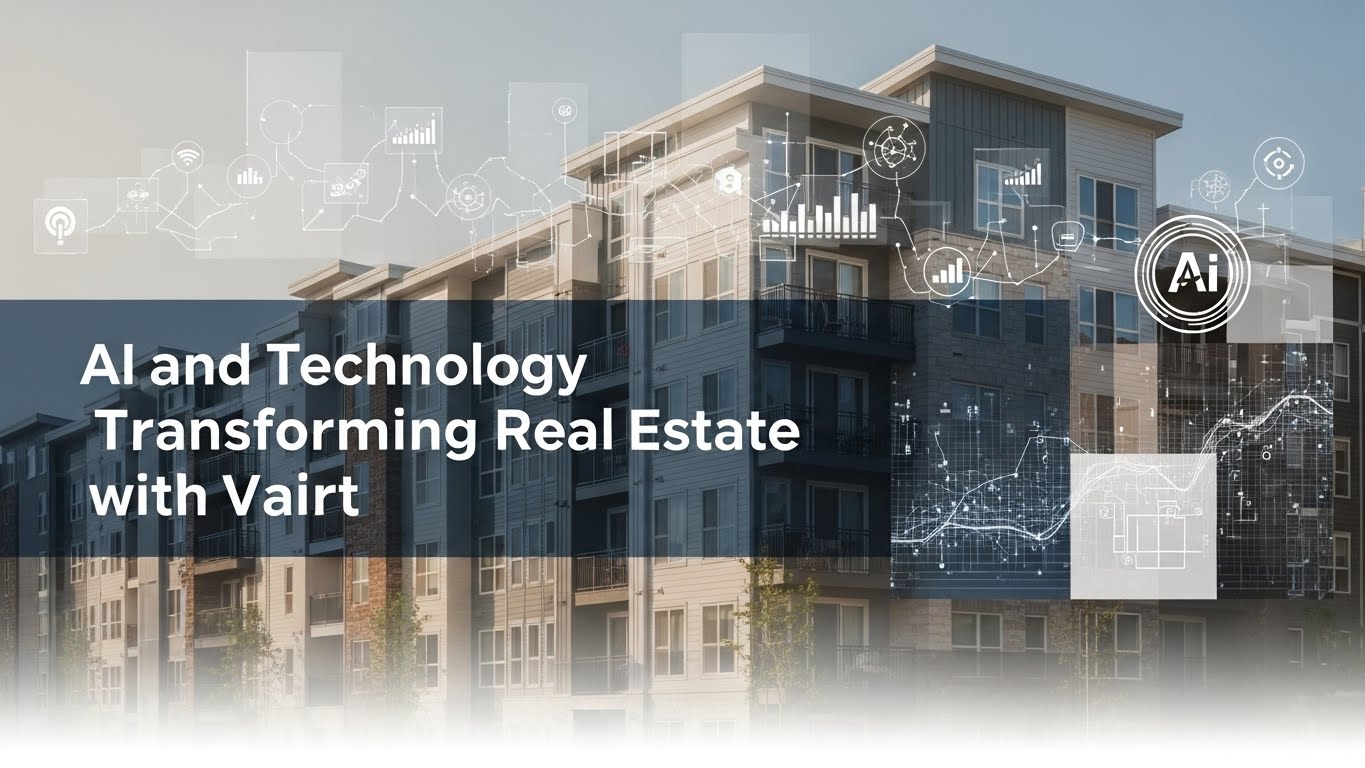
Technology is transforming every industry, and real estate is no exception. In the United States, 2026 marks a turning point where artificial intelligence and advanced digital tools are reshaping the way homes are bought, sold, and invested in. From pricing analysis to virtual tours and predictive analytics, AI is making real estate faster, more transparent, and more efficient for buyers, sellers, and investors alike.
Traditionally, real estate transactions have been slow and paperwork-heavy. Buyers relied on listings, open houses, and brokers to make decisions, while sellers faced long closing times and uncertainty in pricing. Hidden fees and manual processes often added complexity to what should be a straightforward transaction. These challenges created inefficiencies that technology is now addressing.
One of the most impactful applications of AI in real estate is automated home valuation. AI algorithms can analyze massive amounts of property data, including historical sales, neighborhood trends, and property features, to generate accurate pricing in real-time. Automated valuation models help buyers avoid overpaying and sellers price their homes competitively. Real-time market insights also allow investors to make informed decisions without relying solely on human appraisers.
Virtual tours and augmented reality are changing how buyers explore homes. With 3D tours and AR apps, buyers can experience a property remotely, visualizing the space as if they were physically there. This technology is especially useful for international investors, busy professionals, or those relocating to a new city. By providing an immersive experience, virtual tours improve decision-making and reduce the need for repeated in-person visits.
AI-driven predictive analytics allow investors to forecast housing trends, rental demand, and property appreciation. By analyzing historical and current market data, AI can identify high-demand neighborhoods and undervalued properties. Investors benefit from actionable insights that reduce risk and maximize potential returns, making it easier to make data-driven decisions in a complex market.
Technology also streamlines the administrative side of real estate. Digital platforms automate document processing, contracts, and signatures, significantly reducing closing times and lowering transaction costs. These tools allow buyers and sellers to complete transactions faster, with fewer intermediaries, while maintaining accuracy and legal compliance.
Despite its advantages, AI in real estate is not without risks. Overreliance on AI predictions can lead to poor investment decisions if the data is incomplete or outdated. Privacy concerns are also significant, as platforms collect and store sensitive buyer and seller information. While AI improves efficiency, human judgment remains essential to interpret insights and navigate ethical considerations.
For homebuyers and investors, AI and technology provide unprecedented transparency and convenience. Buyers can make more informed decisions, while investors can access insights that were previously difficult to obtain. Smaller investors can now participate in real estate markets through technology-driven platforms, leveling the playing field and opening opportunities for wider market access.
The future of AI in real estate includes smart contracts, blockchain integration, predictive property maintenance, and highly personalized investment recommendations. Virtual and augmented reality experiences will become more immersive, allowing buyers to fully explore properties before committing. As these technologies advance, adoption will continue to grow, making real estate more accessible, efficient, and data-driven.
Vairt is a technology-driven platform that allows investors to participate in U.S. real estate efficiently and transparently. By integrating advanced AI tools, Vairt helps users evaluate properties, analyze market trends, and make data-driven investment decisions. The platform simplifies the process of investing in real estate by providing clear insights, digital document management, and automated income tracking, all in a single interface.
Investing with Vairt comes with several benefits. First, it reduces barriers to entry, allowing investors to start with smaller capital while still gaining exposure to high-quality properties. Second, it provides transparency in ownership, income distribution, and performance tracking, ensuring that investors know exactly how their money is being utilized. Third, Vairt uses AI to identify emerging opportunities and assess risks, giving investors an advantage in a competitive market.
Getting started with Vairt is simple. Investors can create an account on the platform, browse available properties, and select investment options that match their goals. With AI-powered insights and Shariah-compliant fractional ownership models, Vairt makes real estate investing accessible, ethical, and efficient for all types of investors, whether beginners or experienced.
Artificial intelligence and technology are transforming U.S. real estate, making transactions faster, smarter, and more transparent. Buyers and investors who embrace these innovations gain a competitive advantage in a market that is increasingly data-driven and technology-enabled. The integration of AI into homebuying and investing is no longer optional it is shaping the future of real estate.
1. How accurate are AI home valuations?
AI valuations are highly accurate when based on comprehensive and up-to-date data, but they should be used alongside professional appraisals for critical decisions.
2. Can AI replace real estate agents completely?
No. While AI improves efficiency, human agents provide guidance, negotiation expertise, and personalized advice that technology alone cannot replicate.
3. Are virtual tours as effective as in-person visits?
Virtual tours are highly effective for initial evaluations and remote decision-making, but in-person visits may still be needed for final verification.
4. How safe is my data when using AI-driven platforms?
Most platforms follow strict security and privacy protocols, but users should always review terms and ensure data protection measures are in place.
5. What are the best AI tools for real estate investors in 2026?
Some leading tools include automated valuation platforms, predictive analytics dashboards, virtual tour software, and AI-driven investment research platforms.

Hassan is a financial writer at Vairt, specializing in halal investing and ethical wealth management. He simplifies complex financial topics to help Muslim investors explore Shariah-compliant opportunities in real estate, stocks, gold, and more. His goal is to empower readers with clear, practical insights for confident and long-term wealth building.


Certain statements contained in this document constitute forward-looking statements. Such forward-looking statements, including our intended actions and performance objectives, projections, targets, estimates, or forecasts involve known and unknown risks, uncertainties and other important factors, including our ability to successfully develop and operate the Vairt Marketplace, our business model and the services we intend to offer. These factors are based on expectations and assumptions that may change and are subject to regulatory uncertainty, changes in our legal environment and the blockchain and real estate industries generally, which could cause our actual results, performance or achievements to differ materially from any future results, performance or achievements expressed or implied by such forward-looking statements. All amounts, numbers, ranges, and values presented in this document are subject to material change and should be taken as preliminary and indicative only. Any such amounts, numbers, ranges, and values are based upon preliminary estimates, remain subject to ongoing analysis and may change materially. All forward-looking statements in this document speak only as of the date hereof. We expressly disclaim any obligation to update any forward-looking statement to reflect any change in our expectation or any change in events, conditions, assumptions or circumstances.
Comments