



Understanding Riba and Financial Ethics
Major Halal Investment Options
Real Estate and Asset-Backed Investing
Building a Diversified Halal Portfolio
Retirement Planning the Halal Way
Timeless Guidance from Islamic Scholarship
Wealth in Islam is not condemned. It is a trust.
Allah says:
“Allah has permitted trade and forbidden riba.” (Qur’an 2:275)
This single verse defines the foundation of halal investing. Commerce, ownership, and productive capital are permitted. Exploitative gain through interest is not.
Halal investing in America requires aligning modern financial tools with timeless Islamic principles. It is not merely about avoiding certain industries. It is about structuring wealth in a way that preserves faith, protects capital, and promotes real economic value.
Muslim investors today seek:
Growth without compromise
Income without interest
Stability without speculation
Diversification without unethical exposure
This guide provides a structured approach to Shariah-compliant investing in the United States.
Islamic finance is built upon clear principles:
Avoidance of Riba (Interest)
Riba is explicitly prohibited in the Qur’an and Hadith. Any guaranteed return tied purely to lending money falls under this prohibition.
Avoidance of Gharar (Excessive Uncertainty)
Transactions must be transparent and clearly structured.
Avoidance of Maysir (Speculation)
Wealth should be created through productive activity, not gambling-like risk.
Ethical Business Activity
Investments must avoid industries that contradict Islamic values.
Asset-Backed Economic Activity
Classical Islamic commerce was rooted in tangible trade, partnership, agriculture, and property — not abstract financial engineering.
Ibn Taymiyyah emphasized that wealth must circulate in ways that benefit society, not concentrate unjustly through exploitative mechanisms.
Understanding Riba and Financial Ethics
Modern financial systems are heavily structured around debt and interest-based instruments.
Common conventional allocations include:
Interest-based bonds
High-leverage corporate financing
Structured debt products
Islamic scholarship consistently warns against wealth derived primarily from lending money for gain.
Imam Al-Ghazali wrote in Ihya Ulum al-Din that money itself is not meant to be a commodity but a medium of exchange. When money becomes the product, ethical distortions arise.
This insight remains deeply relevant in contemporary investing.
Muslim investors have multiple avenues for Shariah-compliant capital allocation.
Halal Stocks
Equity ownership represents partnership in a business. When properly screened, it aligns with the Islamic principle of profit-and-loss sharing.
Compliance requires:
Permissible industry
Acceptable financial ratios
Ongoing monitoring
Equities offer liquidity and long-term appreciation, though they can be volatile.
Halal ETFs and Mutual Funds
Shariah-compliant funds provide diversified exposure to screened equities.
Investors should review:
Screening standards
Oversight by Shariah advisors
Transparency of holdings
Diversification can reduce risk when structured carefully.
Gold and Commodities
Gold historically served as a monetary standard in Islamic civilization.
Gold investments may be permissible when:
Ownership is direct
Settlement is immediate
Leverage is avoided
Real estate occupies a special place in Islamic finance because it reflects:
Tangible ownership
Rental-based income
Productive use
Long-term capital appreciation
Property investment aligns with the prophetic tradition of trade and partnership.
Asset-backed investing offers:
Inflation resistance
Income generation
Reduced dependence on interest-based instruments
Real economic value
Many contemporary halal portfolios integrate real estate to strengthen stability and income consistency.
Diversification remains important in Islamic investing.
A balanced approach may include:
Screened equities
Asset-backed real estate
Gold or commodities
Liquidity reserves
Allocation depends on:
Risk tolerance
Time horizon
Income requirements
Long-term goals
Islamic investing encourages prudence, not extremism.
The Prophet ﷺ said:
“Tie your camel and trust in Allah.” (Tirmidhi)
Financial planning reflects this balance between effort and reliance.
Long-term financial planning is encouraged in Islam, provided it remains ethical.
Employer-sponsored accounts may require review and adjustment to ensure:
Avoidance of interest-based funds
Proper allocation
Periodic monitoring
Halal retirement investing combines discipline, screening, and asset diversification.
Classical scholars emphasized:
Partnership (musharakah)
Profit-sharing (mudarabah)
Trade-based wealth
Real economic value
These principles remain directly applicable today.
Modern halal investing is simply the adaptation of these timeless frameworks to contemporary financial structures.
Halal investing in America requires clarity, structure, and disciplined execution. From screening stocks and reviewing retirement accounts to seeking asset-backed investments and inflation protection, Muslim investors must navigate multiple layers of compliance and strategy. Managing all of this independently can be complex and time-consuming. This is where structured investment platforms become essential.
Vairt brings together asset-backed real estate opportunities, professional management, transparent structures, and income-generating investments in one place - making halal investing simpler and more accessible. Instead of struggling to evaluate markets, structures, and compliance standards alone, investors can access professionally managed, Shariah-conscious real asset investments designed for stability, diversification, and long-term growth. When faith and financial strategy are aligned through the right platform, building halal wealth becomes clear, structured, and achievable.
Is investing halal in the United States?
Yes, investing is permissible when structured according to Shariah principles and free from riba and unethical industries.
Are stocks halal?
Stocks can be halal if the company’s business and financial structure meet accepted screening standards.
Is real estate halal?
Yes, property investment is generally permissible when structured without interest and tied to legitimate economic activity.
What is the safest halal investment?
There is no universal answer. Diversified, asset-backed strategies are often considered more stable.
Can retirement accounts be halal?
Yes, with careful selection of compliant investment options and periodic review.
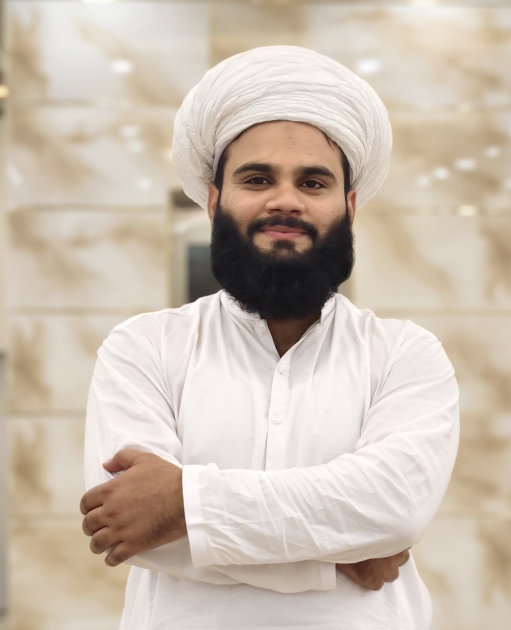
I'm Muhammad Waqas, a real estate content writer at Vairt with 8 years of experience writing about property ownership and real estate. I cover topics such as fractional real estate, hotel and commercial property ownership, and how to evaluate income-producing properties. My writing focuses on helping U.S. readers understand how professionally managed real estate works, including its benefits, risks, and structure, before they explore an opportunity.

Certain statements contained in this document constitute forward-looking statements. Such forward-looking statements, including our intended actions and performance objectives, projections, targets, estimates, or forecasts involve known and unknown risks, uncertainties and other important factors, including our ability to successfully develop and operate the Vairt Marketplace, our business model and the services we intend to offer. These factors are based on expectations and assumptions that may change and are subject to regulatory uncertainty, changes in our legal environment and the blockchain and real estate industries generally, which could cause our actual results, performance or achievements to differ materially from any future results, performance or achievements expressed or implied by such forward-looking statements. All amounts, numbers, ranges, and values presented in this document are subject to material change and should be taken as preliminary and indicative only. Any such amounts, numbers, ranges, and values are based upon preliminary estimates, remain subject to ongoing analysis and may change materially. All forward-looking statements in this document speak only as of the date hereof. We expressly disclaim any obligation to update any forward-looking statement to reflect any change in our expectation or any change in events, conditions, assumptions or circumstances.


.jpg)

Comments