






Owning part of a hotel might sound like something reserved for large real estate companies or wealthy property developers. After all, purchasing an entire hotel requires substantial capital, experienced management, and the ability to oversee a complex hospitality business.
But buying an entire hotel isn't the only way to participate in hotel ownership.
If you're wondering how to Buy Shares in a Hotel Property, fractional ownership offers a practical alternative. Rather than acquiring the whole building, you can purchase a proportional ownership interest through a legal entity that holds the hotel, while professional operators manage the property.
Platforms such as Vairt make this approach accessible to eligible U.S. buyers by offering opportunities in identifiable hospitality properties. This guide explains how hotel shares work, what you actually own, how income is generated, and what to review before making a purchase.
Interested in Owning a Share of a Hotel Property? Schedule a 15-minute meeting with Vairt to discuss fractional hotel ownership and available U.S. hospitality property opportunities.
You can buy shares in a hotel property by participating in a fractional ownership arrangement that allows multiple buyers to hold interests in the same hotel through a structured legal entity.
The process usually begins with selecting an available hotel, reviewing its financial and operational information, confirming eligibility, and completing the required ownership documentation. Once the offering is funded and completed, participants receive ownership interests according to the applicable legal agreement.
Unlike buying hotel company stocks on a public exchange, property-specific fractional ownership connects your participation to an identified physical asset. Understanding how partial property ownership works helps explain why this distinction matters and how shares are allocated through a legal ownership structure.
Professional management is another defining feature. Instead of supervising hotel employees, handling guest reservations, or maintaining the building, owners rely on experienced operating teams to manage everyday hospitality activities.
Owning hotel shares means holding a defined legal and economic interest connected to a hospitality property. The rights associated with those shares depend on the structure of the offering and the governing documents.
In a common fractional ownership arrangement, a limited liability company, or LLC, holds the hotel. Participants own shares or membership interests in that LLC rather than individually holding the property's entire deed.
For example, Vairt's stated ownership model places each funded property inside a separate property-specific LLC. The entity is divided into one million shares, with participants receiving an allocation proportional to their contributions.
Those shares represent an economic interest in the property-owning entity. They can provide rights to eligible income distributions and potential sale proceeds under the terms of the agreement.
Hotel fractional ownership should also be distinguished from timeshare arrangements. Timeshares are generally associated with the right to use accommodations during specified periods, while income-focused hotel ownership concentrates on the property's financial performance rather than personal access to guest rooms.
For people primarily interested in hotel ownership without operational responsibilities, Vairt's guide to owning a hotel without managing it explains how property owners and hospitality operators fulfill different roles.
The most useful starting point is the hotel's operating performance and the assumptions supporting its future income potential.
A hotel generates revenue primarily from room bookings, with additional revenue potentially coming from restaurants, conferences, events, and other hospitality services. Its financial results are influenced by guest demand, room pricing, occupancy, staffing, maintenance, and operating expenses.
Location also matters. Hotels serving business districts, hospitals, universities, transportation corridors, and event venues may attract different types of guests throughout the year.
Two useful hospitality measures are occupancy rate, which shows the percentage of available rooms occupied, and average daily rate, or ADR, which measures average room revenue per occupied room. Together, these help explain how a hotel's room business performs.
Buyers should also understand net operating income, or NOI, which generally means property revenue remaining after normal operating expenses, before financing and certain other costs.
Learning how to evaluate an income-producing property can help buyers examine revenue assumptions, property expenses, management fees, and projected distributions before comparing hotel ownership opportunities.
The most suitable property is not necessarily the one advertising the highest projected income. It is one whose location, operating history, ownership terms, and management arrangements align with the buyer's objectives.
Evaluating a Hotel Property Opportunity? Schedule a 15-minute meeting with Vairt to discuss hotel performance, property evaluation, and available hospitality ownership opportunities.
Hotel shares can provide income exposure through the financial performance of the underlying hospitality property.
When guests book rooms, purchase food and beverages, or use additional hotel services, the business generates operating revenue. Expenses such as wages, utilities, maintenance, insurance, property taxes, and applicable management costs must be accounted for before cash becomes available for distribution.
Under a fractional ownership arrangement, eligible distributable income is allocated according to the ownership agreement. A participant's proportion of available income generally reflects the economic rights attached to their shares.
Vairt describes a model in which available rental income is distributed monthly to owners' digital wallets, allowing them to withdraw funds or use them toward other property opportunities.
However, income is not guaranteed. Actual distributions depend on hotel occupancy, operating expenses, reserves, financing arrangements, and market conditions.
Potential appreciation provides another component of hotel ownership. Appreciation means an increase in property value over time, which may create additional proceeds if the property is eventually sold at a higher value. The amount received by individual owners depends on the actual sale results and the terms governing distribution of proceeds.
Vairt provides a digital platform that helps eligible participants explore, review, and access professionally managed U.S. property ownership opportunities.
The journey begins with finding a property that matches your capital availability and preferred holding period. Buyers can review hotel details, consider projected income, examine the legal ownership structure, and understand the property's operational strategy before making a commitment.
Vairt evaluates potential properties through a proprietary 100-point screening system supported by third-party valuation information. Its property screening and review process also examines sponsors, supporting documentation, and financial assumptions before opportunities are presented on the platform.
After selecting a property, prospective participants complete the account registration and relevant eligibility requirements. Under Vairt's stated model, properties are offered through a 30-day funding period, with participant funds held in escrow while funding is completed.
If a property does not reach the required funding level, committed funds are returned to participants' digital wallets without an additional charge.
When funding is completed, the property-specific LLC holds the underlying real estate, and qualifying participants receive shares according to their contributions and the governing documents.
From that point, professional management teams handle everyday hotel operations, while owners monitor available financial and property information through the platform.
Buyers interested in understanding the company's background can also review Vairt's approach to real estate ownership before considering a particular hotel offering.
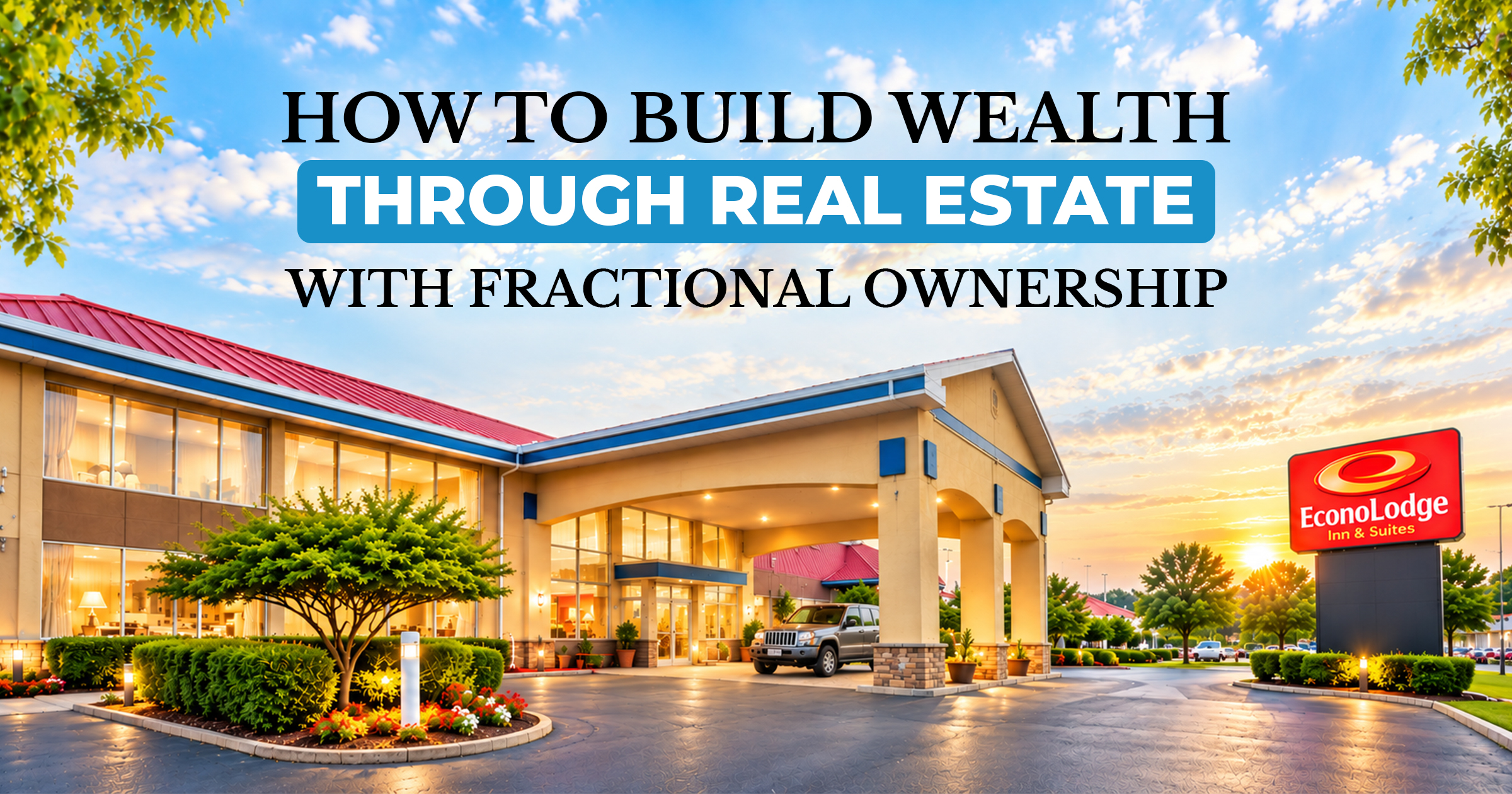
One of the hospitality properties featured on Vairt is Four Points by Sheraton in downtown Peoria, Illinois. This example illustrates how fractional hotel ownership can provide access to an existing commercial hospitality property.
Located at 500 Hamilton Boulevard in Peoria, Illinois, Four Points by Sheraton is a 323-room, full-service hotel operating under the Marriott brand.
The property completed a $40 million renovation in 2020 and serves a downtown location associated with corporate activity, business travel, and event-related demand.
A recognized hospitality brand, professional operating structure, and established physical property provide buyers with identifiable factors to evaluate when examining the opportunity.
Vairt lists a minimum participation amount of $25,000 for the hotel, with projected annual rental income of 7%–9% during years one through five. The offering contemplates monthly distributions, subject to actual operating performance and applicable ownership terms.
People interested in this specific property can examine the Four Points by Sheraton hotel ownership opportunity to review its available information, management arrangements, and supporting documents before deciding whether to participate.
The property demonstrates how hotel shares can connect owners to a specific income-producing hospitality asset without requiring them to oversee reservations, housekeeping, staffing, or daily guest services.
Not sure how much capital you need or how hotel ownership shares are structured?
Schedule a free 15-minute call with the Vairt team to discuss hotel ownership, participation requirements, projected income, and the documents to review before choosing a property.
The required amount depends on the hotel's ownership structure, the platform offering the property, and its minimum participation requirements.
Buying an entire hotel can require substantial capital, especially when financing, property acquisition costs, renovation needs, and ongoing operational reserves are considered.
Fractional ownership provides a different entry point because eligible participants contribute toward the same property instead of financing the entire acquisition individually.
Vairt's current featured U.S. property opportunities generally start at $25,000, including the Four Points by Sheraton hotel in Peoria, Illinois.
Buyers can compare available U.S. property ownership opportunities to understand how minimum amounts, property types, holding periods, and eligibility requirements differ across listings.
Some properties may be available only to particular participant categories, so reviewing the applicable offering conditions is essential.
Creating a Vairt account takes a few minutes and begins the process of accessing additional property information. Prospective owners can register with Vairt to explore the platform, complete the required onboarding process, and review property-specific participation requirements.
Hotel ownership is generally better suited to individuals comfortable holding a property interest over several years.
Vairt's stated model uses a five-year holding period, which represents the intended duration of ownership before a potential property sale or other exit arrangement.
A longer holding period gives the operating strategy time to develop, particularly when a property requires improvements, repositioning, or changes intended to support long-term value.
Vairt describes a 90-day exit option under certain arrangements. It also describes potential secondary-market transfers and the ability of owners to call for a vote concerning a sale of the entire property.
These mechanisms are subject to the relevant terms, available buyers, owner decisions, and market conditions. They should not be interpreted as guaranteed liquidity or a promise that shares can be sold immediately.
Before purchasing hotel shares, buyers should understand how transfer requests are handled, which fees may apply, and what happens if the property is held longer than originally anticipated.
Fractional hotel ownership may be suitable for individuals who want exposure to hospitality real estate without purchasing and managing an entire hotel.
It can appeal to professionals and business owners who have capital available for a multi-year commitment but prefer not to handle guest services, hotel staffing, maintenance, or property administration.
This approach may also interest buyers who value being able to select an identifiable hotel rather than owning shares in a company that holds a broad portfolio of unrelated properties.
For buyers interested in broader commercial property exposure, understanding potential income from professionally managed commercial real estate can help place hotel ownership alongside other property types.
However, individuals seeking personal use of hotel rooms, complete control over operating decisions, or immediate access to their capital may prefer a different ownership arrangement.
The appropriate choice depends on financial objectives, participation requirements, holding-period expectations, and the rights established in the property's legal documentation.
Choosing to Buy Shares in a Hotel Property begins with understanding what you own, how the hotel generates revenue, who manages its operations, and how income or eventual sale proceeds may be distributed.
Fractional hotel ownership offers a way to participate in commercial hospitality real estate without acquiring an entire property or assuming day-to-day management responsibilities.
Vairt provides access to selected professionally managed U.S. real estate opportunities, including the Four Points by Sheraton hotel in Peoria, Illinois, with property-specific information and defined participation requirements.
Before choosing an opportunity, review the ownership agreement, operating assumptions, projected income, fees, eligibility criteria, and holding-period provisions.
If fractional hotel ownership aligns with your objectives, you can create a free Vairt account to access additional property information, review the required documentation, and explore available hotel ownership opportunities.
Ready to Own a Share of a Hotel Property? Schedule a 15-minute meeting with Vairt to discuss fractional hotel ownership and available U.S. hospitality property opportunities.
Yes. Fractional ownership allows multiple buyers to hold proportional interests in a hotel, typically through a property-specific LLC, while professional teams manage operations.
The minimum varies by property. Vairt's featured U.S. hotel opportunities generally start at $25,000, subject to availability, eligibility, and applicable fees.
Shareholders may receive monthly distributions based on hotel performance, available cash flow, and ownership terms. Income is not guaranteed.
No. Professional management teams handle daily hotel operations, while shareholders can monitor financial updates and property performance.
No. Fractional ownership provides an interest in a specific hotel property, while hotel stocks represent ownership in a publicly traded company.
Selling depends on the ownership agreement and available exit options. Vairt describes a five-year holding period and certain exit mechanisms, but immediate liquidity is not guaranteed.

I'm Muhammad Waqas, a real estate content writer at Vairt with 8 years of experience writing about property ownership and real estate. I cover topics such as fractional real estate, hotel and commercial property ownership, and how to evaluate income-producing properties. My writing focuses on helping U.S. readers understand how professionally managed real estate works, including its benefits, risks, and structure, before they explore an opportunity.

Certain statements contained in this document constitute forward-looking statements. Such forward-looking statements, including our intended actions and performance objectives, projections, targets, estimates, or forecasts involve known and unknown risks, uncertainties and other important factors, including our ability to successfully develop and operate the Vairt Marketplace, our business model and the services we intend to offer. These factors are based on expectations and assumptions that may change and are subject to regulatory uncertainty, changes in our legal environment and the blockchain and real estate industries generally, which could cause our actual results, performance or achievements to differ materially from any future results, performance or achievements expressed or implied by such forward-looking statements. All amounts, numbers, ranges, and values presented in this document are subject to material change and should be taken as preliminary and indicative only. Any such amounts, numbers, ranges, and values are based upon preliminary estimates, remain subject to ongoing analysis and may change materially. All forward-looking statements in this document speak only as of the date hereof. We expressly disclaim any obligation to update any forward-looking statement to reflect any change in our expectation or any change in events, conditions, assumptions or circumstances.



Comments