






Buying real estate for the first time is an important financial decision. Many people want to own income-producing property, build long-term wealth, and benefit from potential rental income. However, purchasing an entire property can require substantial capital, ongoing maintenance, and significant time.
This is why the debate around fractional ownership vs direct ownership has become relevant for first-time property buyers in the United States. Both approaches provide ways to participate in real estate, but they differ in ownership structure, financial requirements, management responsibilities, and decision-making authority.
Direct ownership offers greater control over a property, while fractional ownership can provide access to professionally managed real estate with a smaller initial financial commitment. Platforms such as Vairt offer fractional ownership opportunities starting from $25,000, making hospitality and commercial properties more accessible to eligible participants.
Understanding these differences can help first-time buyers determine which approach best suits their financial goals and lifestyle.
Considering Fractional or Direct Property Ownership? Schedule a 15-minute meeting with Vairt to understand fractional ownership and available U.S. real estate opportunities starting at $25,000.

The main difference between fractional ownership and direct ownership is how the property is held, managed, and controlled.
Direct ownership generally means an individual or legal entity purchases an entire property and assumes responsibility for its financial performance and management. The owner has authority over important decisions, including property improvements, tenant selection, financing, and the timing of a sale.
Fractional ownership allows multiple participants to hold proportional interests in a property through a structured ownership arrangement. The property is typically operated by professional managers, while participants receive economic ownership rights according to the governing agreements.
For first-time buyers, the distinction is particularly important because ownership responsibilities can affect both available time and financial commitments.
Vairt's guide to partial property ownership explains how shared ownership structures operate and how participants can hold interests in specific properties.
Direct ownership begins when an individual purchases a property independently, either using personal funds or arranging financing.
After completing the purchase, the owner becomes responsible for maintaining the property's condition, managing expenses, arranging insurance, and finding occupants when rental income is part of the plan.
For example, someone purchasing a rental home must consider tenant screening, property repairs, vacancies, local regulations, and unexpected maintenance expenses. Hiring a property management company can reduce daily responsibilities, but the owner still oversees the management relationship and pays the applicable costs.
Direct ownership can provide significant decision-making flexibility. Owners generally have greater authority to renovate, refinance, lease, or sell their property, subject to legal and contractual requirements.
However, this control also comes with greater responsibility for property performance and financial commitments.
Want Property Ownership Without Managing Every Detail Yourself? Schedule a 15-minute meeting with Vairt to discuss fractional ownership and professionally managed U.S. real estate opportunities.
Fractional ownership provides an alternative for individuals who want real estate exposure without purchasing an entire property.
Under this arrangement, several participants contribute toward a property and receive proportional ownership interests through a legal structure. The entity that holds the property manages ownership rights, while designated professionals handle property operations.
Vairt uses a property-specific limited liability company, commonly called an LLC, for its fractional ownership model. An LLC is a legal entity that can own real estate and establish the financial rights of its members.
Vairt describes dividing each property-specific entity into one million shares, allocated according to participant contributions.
Through the platform's real estate ownership process, eligible individuals can review opportunities, understand the ownership arrangement, and monitor property performance without personally managing the property.
Capital requirements are among the most important considerations for first-time real estate buyers.
Direct ownership normally requires sufficient funds to purchase a property outright or cover a down payment, closing expenses, and potential repairs. The amount depends on the property's location, type, condition, and financing arrangements.
Purchasing a hotel or large commercial facility independently can require substantially more capital than purchasing a residential rental property.
Fractional ownership distributes the financial commitment among multiple participants. Rather than covering the purchase of an entire property, an individual contributes an amount corresponding to their ownership interest.
Vairt currently offers U.S. real estate opportunities starting from $25,000, allowing eligible participants to explore selected hospitality and commercial assets.
This structure can make certain property categories accessible without the capital normally required for full ownership.
Looking for Real Estate Opportunities Starting at $25,000? Schedule a 15-minute meeting with Vairt to discuss fractional ownership and access to selected U.S. commercial and hospitality properties.
Fractional ownership through a professionally managed platform generally requires less day-to-day involvement than directly managing a property.
Direct owners must coordinate maintenance, respond to tenants, manage vacancies, and oversee expenses. Even when outside managers are hired, the owner remains responsible for supervising the arrangement.
Professionally managed fractional ownership places these operational responsibilities with dedicated teams.
Vairt coordinates property management activities, including maintenance, occupancy, and daily operations. Owners can monitor performance through the platform rather than handling property-related requests themselves.
This difference may be especially valuable for busy professionals and entrepreneurs who want potential rental income without adding significant operational responsibilities.
Yes. Both direct ownership and fractional ownership can generate rental income when the underlying property produces revenue.
In direct ownership, the owner receives the property's rental revenue and pays the applicable expenses. The amount remaining depends on occupancy, maintenance, financing obligations, taxes, insurance, and other costs.
With fractional ownership, property revenue is collected and managed according to the operating structure. After applicable expenses and reserves, distributable income may be allocated among participants according to their ownership interests.
Vairt describes potential monthly rental distributions through its digital platform.
Neither approach guarantees income because financial performance depends on occupancy, operating costs, local demand, and changing market conditions.
Readers can explore the principles of commercial property rental income to understand how professionally managed properties generate revenue.
Vairt combines access to specific U.S. real estate properties with structured ownership and professional management.
The platform describes a proprietary 100-point property screening process supported by third-party valuation professionals. This process helps evaluate potential opportunities before they are presented for participant consideration.
Its property review methodology examines factors associated with the property's characteristics, operating assumptions, and market potential.
For first-time participants, this approach provides an organized way to explore properties and understand the underlying ownership arrangement.
Vairt also offers a digital experience for reviewing property information and monitoring performance. Creating an account with Vairt takes a few minutes to begin and provides access to onboarding and additional property details.
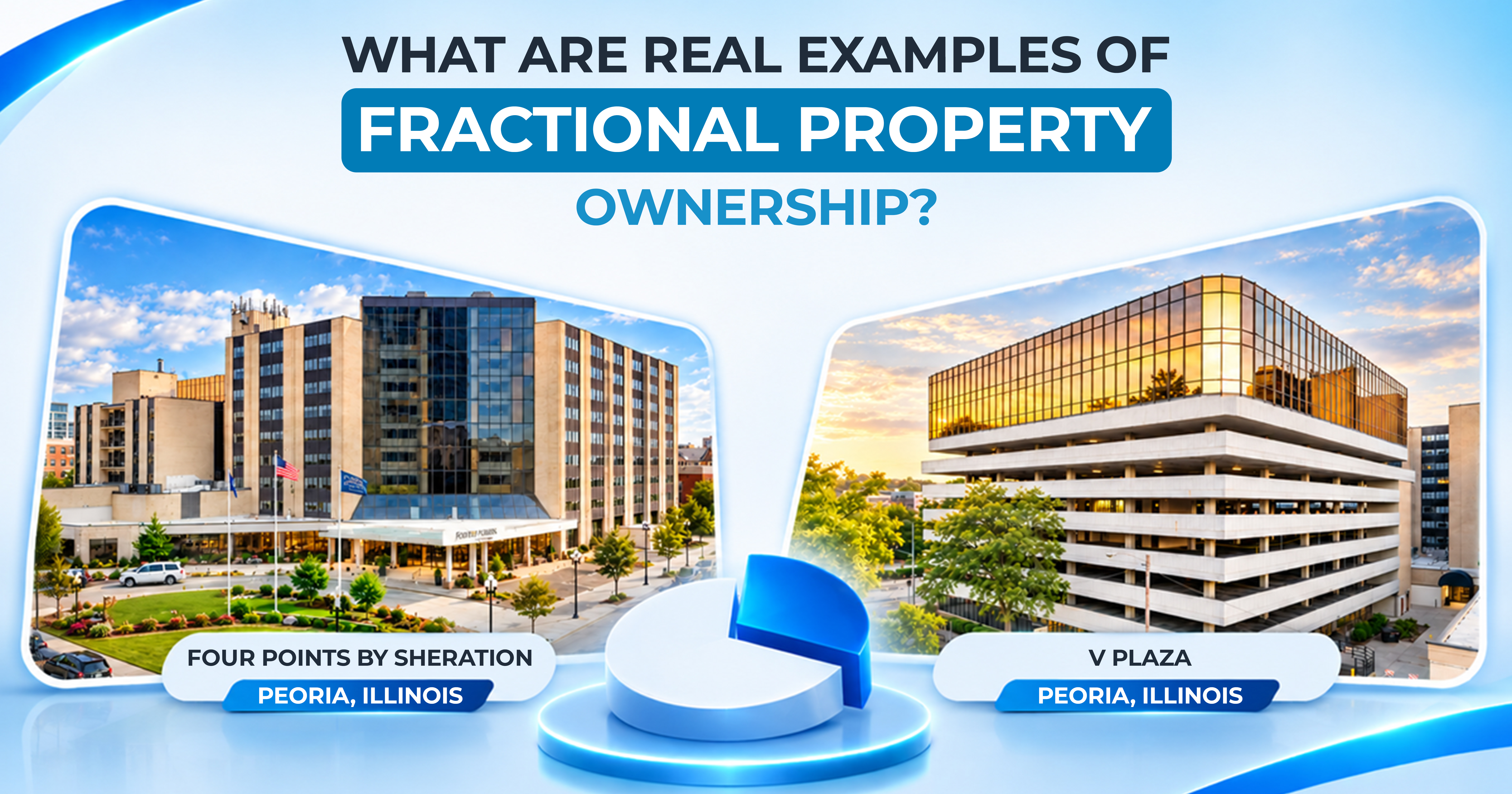
Specific properties demonstrate how fractional ownership can provide access to real estate categories that are difficult for individuals to acquire independently.
The Four Points by Sheraton hotel is a 323-room, full-service hospitality property located at 500 Hamilton Boulevard in Downtown Peoria, Illinois.
Operating under the Marriott brand, the hotel underwent an approximately $40 million renovation completed in 2020.
Vairt lists projected annual rental income of 7%–9% during years one through five, with potential monthly distributions. Actual income depends on occupancy, operating expenses, reserves, and market performance.
Through fractional ownership, eligible participants can explore an interest in this hospitality property without assuming direct responsibility for hotel operations.
Vairt also presents a Commercial Office & Parking opportunity at 222 NE Monroe Street in Downtown Peoria.
The property contains approximately 272,876 square feet, including around 68,360 square feet of office space and a seven-story parking facility with approximately 552 spaces.
Its potential income sources include commercial leasing and parking operations. Vairt lists projected annual rental income of 8%–10% during years one through five, with potential monthly distributions subject to actual performance.
Both properties illustrate the difference between owning an entire commercial asset directly and participating through a professionally managed ownership structure.
Interested in real estate ownership but unsure whether managing an entire property is right for you?
Schedule a free 15-minute call to request a discussion about fractional ownership, available U.S. properties, ownership structures, and eligibility.
Control and the ability to sell an ownership interest are important differences between direct and fractional ownership.
Direct owners generally decide when to list their property for sale, subject to applicable agreements and market conditions. However, completing a property sale may require time, preparation, and transaction expenses.
Fractional owners typically have less authority over daily property decisions because professional teams manage the asset.
Vairt generally describes a five-year holding period, with potential early-exit arrangements subject to governing documents. Its model includes opportunities to list ownership interests on a secondary market or participate in owner voting procedures concerning a property sale.
These options depend on applicable terms, buyer demand, and market conditions. An early sale is not guaranteed.
Direct ownership may suit individuals who have sufficient capital, want greater authority over property decisions, and are comfortable managing or supervising property operations.
Fractional ownership may appeal to first-time buyers who prefer a smaller initial commitment, professional management, and access to specific commercial or hospitality properties.
Individuals who value hands-off ownership and are comfortable with longer holding periods may find professionally managed fractional ownership particularly relevant.
Those seeking immediate access to their capital or complete control over property operations may prefer other arrangements.
The choice between fractional ownership vs direct ownership depends on available capital, desired control, management responsibilities, and long-term financial objectives.
Direct ownership provides greater authority over an entire property but also involves more operational and financial responsibilities. Fractional ownership offers a different approach by allowing participants to hold proportional interests in professionally managed real estate.
Vairt provides opportunities starting from $25,000, allowing eligible individuals to explore hospitality and commercial properties without purchasing an entire building.
Before making a decision, review the property's ownership structure, financial projections, management arrangements, expected holding period, and eligibility requirements.
Create your Vairt account to explore current U.S. real estate opportunities and determine which ownership approach may align with your goals.
Fractional ownership offers a lower entry cost and professional management, while direct ownership provides greater control but requires more capital.
Yes. With Vairt, investors hold proportional interests in a property-owning LLC, with rights defined by its legal agreements.
Vairt opportunities start at $25,000, depending on property availability and investor eligibility.
Yes. Owners may receive distributions from property revenue after expenses, depending on performance. Returns are not guaranteed.
No. Professional management teams handle daily operations, maintenance, and tenant or guest services.
Potentially, depending on the ownership agreement and available buyers. Vairt generally recommends a five-year holding period, and early sales are not guaranteed.
Both can benefit from property appreciation. Direct ownership offers more control, while fractional ownership relies on professional management and market performance.

I'm Muhammad Waqas, a real estate content writer at Vairt with 8 years of experience writing about property ownership and real estate. I cover topics such as fractional real estate, hotel and commercial property ownership, and how to evaluate income-producing properties. My writing focuses on helping U.S. readers understand how professionally managed real estate works, including its benefits, risks, and structure, before they explore an opportunity.

Certain statements contained in this document constitute forward-looking statements. Such forward-looking statements, including our intended actions and performance objectives, projections, targets, estimates, or forecasts involve known and unknown risks, uncertainties and other important factors, including our ability to successfully develop and operate the Vairt Marketplace, our business model and the services we intend to offer. These factors are based on expectations and assumptions that may change and are subject to regulatory uncertainty, changes in our legal environment and the blockchain and real estate industries generally, which could cause our actual results, performance or achievements to differ materially from any future results, performance or achievements expressed or implied by such forward-looking statements. All amounts, numbers, ranges, and values presented in this document are subject to material change and should be taken as preliminary and indicative only. Any such amounts, numbers, ranges, and values are based upon preliminary estimates, remain subject to ongoing analysis and may change materially. All forward-looking statements in this document speak only as of the date hereof. We expressly disclaim any obligation to update any forward-looking statement to reflect any change in our expectation or any change in events, conditions, assumptions or circumstances.



Comments